How Long Does Epoxy Garage Floor Coating Last in Santa Rosa, CA?
If you’re researching epoxy garage floor coating, you’ve probably come across lifespan estimates that range so widely they’re almost useless. Two years. Twenty years. Lifetime warranty. The numbers don’t line up, and that makes it hard to know whether the investment is actually worth it.
The truth is that epoxy garage floor coating lifespan isn’t random. It comes down to a handful of specific, controllable factors — and the difference between a floor that starts peeling in three years and one that holds up for two decades is almost always traceable back to those factors. Understanding them puts you in a much better position to evaluate your options, ask the right questions, and make a decision you won’t regret five years down the road.
This blog covers how long professionally installed epoxy typically lasts in a residential garage, what drives that lifespan, and what signs to watch for as the coating ages.
How Long Does Epoxy Garage Floor Coating Last?
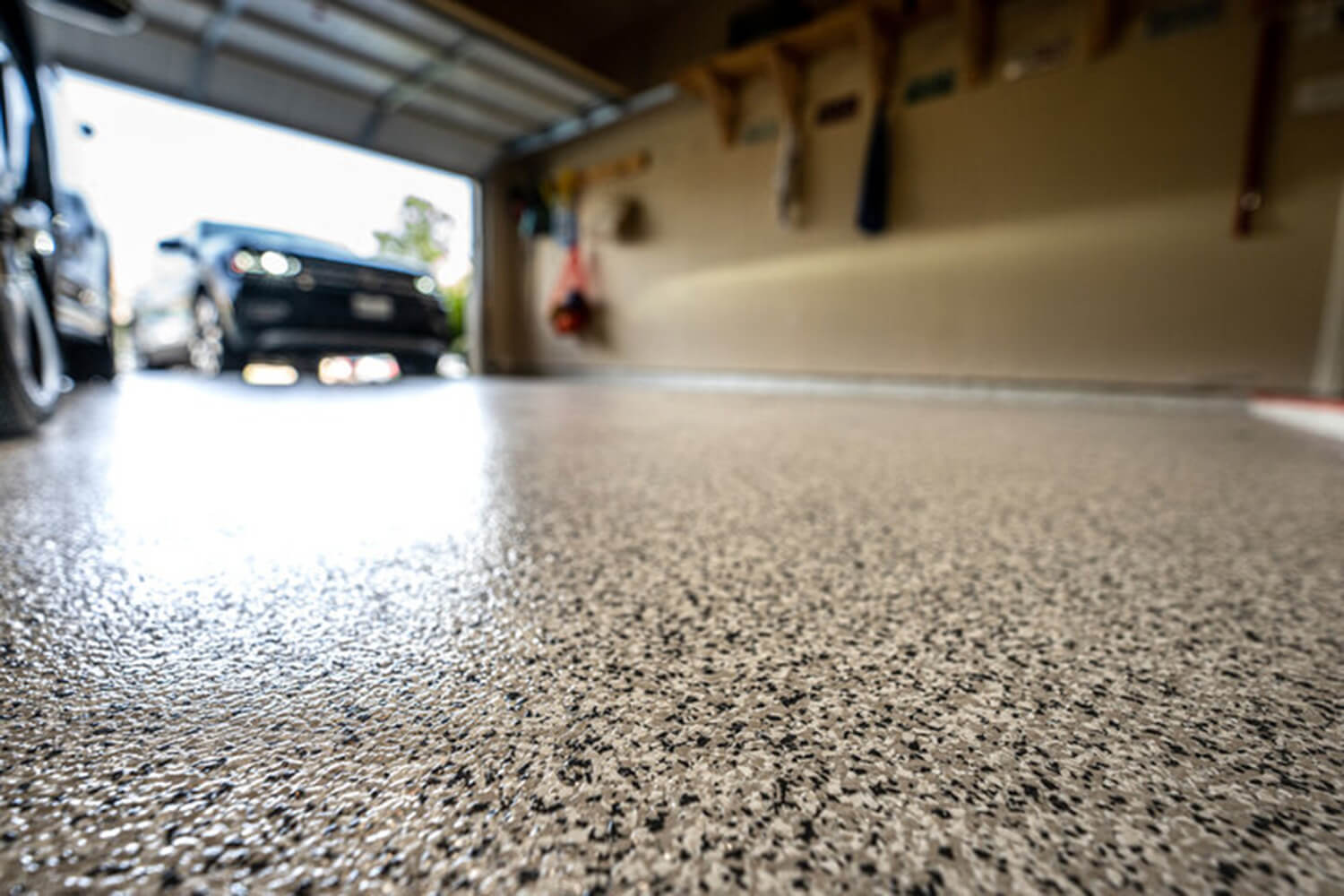
Professionally installed epoxy garage floor coating in a residential setting typically lasts 10 to 20 years. Well-maintained floors on a quality system tend to land toward the upper end of that range. Floors on cheaper systems with minimal prep tend to fall short of it.
If you’re in the Santa Rosa area, the local climate actually works in your favor. Mild North Bay temperatures and the absence of freeze-thaw cycles mean your concrete slab isn’t expanding and contracting the way it does in colder climates. That repeated movement is one of the most common causes of coating stress and delamination, and it’s largely a non-issue here.
Big-box store epoxy kits are a different story. Those products typically last 2 to 5 years before peeling, fading, or flaking. The gap between that and a professionally installed system isn’t just about the material — it’s about the preparation process and application depth that professional installers bring to every job. The 10 to 20 year range applies to professional work. For DIY kits, expect far less.
The range isn’t a coin flip. Specific factors determine where your floor lands within it, and those factors are worth understanding before you commit.
What Determines How Long Your Epoxy Coating Lasts
Every professionally installed epoxy floor starts with the same potential lifespan. What separates a floor that holds up for 20 years from one that starts failing at 8 comes down to a set of factors that are measurable and largely predictable. Understanding them also helps you evaluate contractors before you hire — the right questions map directly to what these factors require.
Surface Preparation
Surface prep is the single most important factor in how long does epoxy garage floor coating last. A coating applied to improperly prepared concrete will fail regardless of product quality. That’s not an exaggeration — it’s the reason most early epoxy failures happen.
Epoxy bonds chemically to the concrete surface. If that surface is dusty, oily, previously sealed, or too smooth, the bond is compromised from the start. Peeling almost always originates at the weakest point of adhesion, not from wear on top of the coating. By the time a homeowner sees peeling, the adhesion failure has usually been present since installation day.
Professional prep involves diamond grinding the concrete to open the surface profile and remove existing sealers, oils, or contaminants. This creates the mechanical texture the epoxy needs to bond properly. One factor specific to the North Bay is moisture in the slab. Seasonal rains can raise vapor emission levels in concrete, and coatings applied without moisture testing are at risk of blistering from below — pressure from trapped moisture working its way up through the slab. Professionals test for this before any product touches the floor.
Here’s the challenge: a homeowner can’t evaluate prep quality by looking at the finished product. The floor looks the same whether prep was done right or skipped entirely. That’s what makes it one of the most important questions to ask before hiring a contractor.
Coating Thickness and Material Grade
Thicker coatings with higher-grade materials last longer. This is one of the clearest and most consistent differences between professional installations and store-bought kits.
Big-box epoxy kits are thin-mil products. They sit on top of the concrete rather than penetrating and bonding at depth. Professional-grade systems are applied at significantly higher build thickness, which means there is simply more material between the surface and the wear that happens every day.
The topcoat is equally important. A UV-stable polyaspartic or urethane topcoat applied over the epoxy base adds a protective layer that absorbs daily wear and shields the color coat underneath. Floors without a quality topcoat show degradation significantly faster. The combination of a properly bonded base coat, color coat, and protective topcoat is what consistently puts floors on the longer end of the lifespan range.
Garage Use and Traffic
How the garage is used is a major lifespan variable. The factors that matter most include:
- Vehicle frequency and type — two parked family cars is a very different load than a working garage with lifts, heavy equipment, and constant in-and-out traffic
- Hot tire pickup — tires heated from highway driving can bond briefly to the coating surface and pull at it when the vehicle moves; a quality topcoat significantly reduces this risk
- Chemical exposure — oil drips, brake fluid, and certain household cleaners left to sit can degrade the coating over time
- Impact frequency — dropped tools and heavy equipment create localized stress that compounds over years of use
For most Santa Rosa homeowners, the garage is a parking space with moderate foot traffic and occasional storage activity. That’s the lightest use category and the most favorable for longevity. A floor in that kind of garage, professionally installed on a quality system, is well-positioned to hit the high end of the 10 to 20 year range.
UV Exposure
Standard epoxy is not UV-stable. Without a UV-resistant topcoat, it will yellow and chalk over time. The epoxy binder reacts to ultraviolet light, breaking down and discoloring — a process sometimes called ambering. It doesn’t indicate structural failure, but it does signal the topcoat is degrading and the floor is losing its protective layer.
Santa Rosa gets significant sun exposure, particularly in summer. Garages with south- or west-facing doors, large windows, or skylights are most at risk. But even garages with minimal window exposure aren’t immune. Garage doors open regularly, and direct sun enters during loading, unloading, and daily comings and goings. UV exposure adds up even in spaces that don’t feel particularly bright.
A UV-stable polyaspartic topcoat addresses this directly. It’s the professional standard for installations in Northern California and is what allows floors to hold their color and finish over the long haul. If you’re weighing all the factors before making a decision, the epoxy flooring pros and cons guide covers the full picture of what to expect from the material.
Maintenance Habits
A professionally installed epoxy floor is low-maintenance — but it isn’t no-maintenance. Consistent basic care is what pushes a floor from the middle of the lifespan range toward the top. The habits that matter most are straightforward:
- Sweep regularly to remove grit and debris that act as abrasives underfoot and under tires — this is the single most impactful daily habit
- Clean up spills promptly, especially oil, gasoline, and harsh chemicals, to prevent staining and surface degradation
- Use only mild soap and water for routine cleaning — acidic or abrasive cleaners not designed for coated floors can break down the topcoat over time
- Place protective mats under vehicles or heavy equipment to reduce localized wear in high-stress areas
- Inspect the floor periodically for chips or worn spots — catching damage early allows for spot repairs before it spreads
Small, consistent habits extend the overall coating life significantly. The homeowners who get the most out of their epoxy floors treat maintenance as a routine rather than a reaction. The same principle applies to any coated surface — neglect compounds, and small problems caught early are always cheaper to fix than large ones caught late.
Signs Your Epoxy Coating Is Wearing Down
A well-installed epoxy floor gives clear signals before it fails completely. Knowing what to watch for means you can act early — which is almost always less expensive and less disruptive than waiting until full replacement is necessary.
The key warning signs to watch for:
- Surface dulling — loss of sheen in high-traffic areas, especially where tires roll, is the earliest warning; the topcoat is thinning and can often be addressed with a recoat before deeper damage sets in
- Yellowing or fading — color change typically means the topcoat has broken down from UV exposure or wear; the floor may still be structurally sound but is no longer protected
- Chipping — localized chips from dropped tools or impacts are normal over time; patch them early to keep moisture from working in underneath
- Widespread cracking — hairline cracks branching across the surface can signal the coating has lost flexibility or the concrete below has shifted; if you notice this pattern developing, the guide to epoxy floor spider web cracks covers what causes them and what the repair process looks like
- Peeling or delamination — coating lifting away from the concrete is the most serious sign; it typically indicates an adhesion failure from poor initial prep or moisture working under the coating from below
A professional assessment can distinguish between a floor that needs a maintenance recoat and one that requires full replacement. That distinction matters — the cost difference is significant, and catching it early is always the better outcome.
A Well-Installed Epoxy Floor Is a Long-Term Investment
Professionally installed epoxy garage floor coating lasts 10 to 20 years in a residential setting. In a climate like Santa Rosa’s — mild temperatures, no freeze-thaw stress, and predictable seasonal patterns — a well-maintained floor on a quality system can hold up toward the top of that range.
The factors that determine where your floor lands are knowable before the project starts. Prep quality, material grade, how the garage is used, and basic maintenance habits all play a role — and all of them are things you can plan for and ask about before a single product is applied. That’s what makes this a real investment rather than a gamble.
At Lavish & Sons, we install professional-grade epoxy floor coatings for homeowners throughout Santa Rosa, Sonoma County, Marin County, and Napa County. If you’re ready to move forward, we’d be glad to assess your garage, walk you through the right system for your space, and provide a free estimate. Reach out to us today to get started.