
Should You Stain or Paint Your Deck in Santa Rosa, CA?
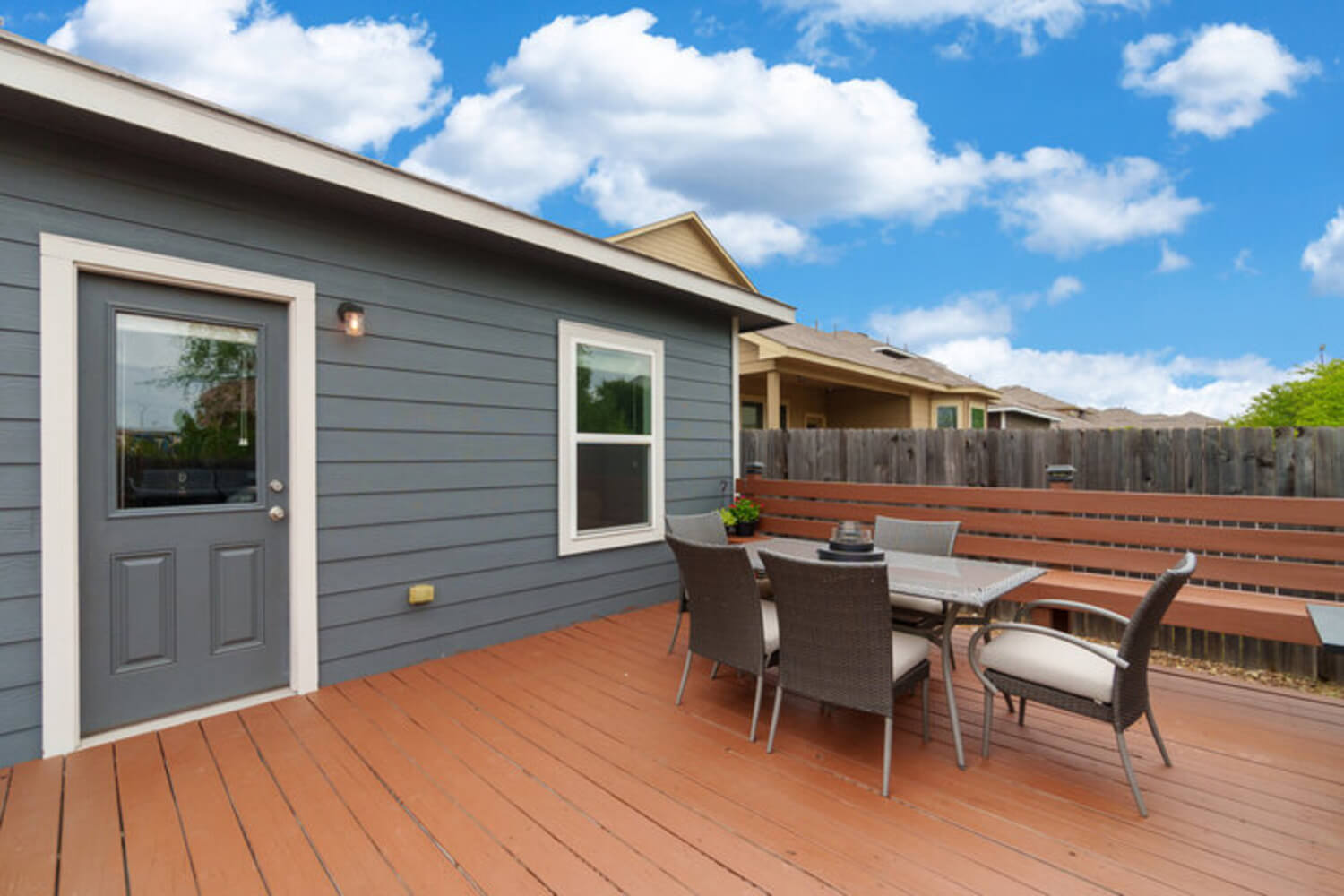
Should you stain or paint a deck once the finish starts fading, chipping, or looking tired? If you’re staring at a worn deck in your Santa Rosa backyard, you’re weighing a decision that a lot of homeowners face every year.
There’s no single right answer for every deck. Staining and painting protect wood in different ways, and the better choice often comes down to your deck’s actual condition rather than pure preference.
This guide breaks down what each finish does, how they compare on appearance, longevity, maintenance, and surface requirements, and how each one holds up against the North Bay’s sun and coastal humidity. By the end, you’ll have a clear way to match the right finish to your own deck.
How Deck Staining and Painting Protect Your Deck
Both finishes protect your deck from sun and moisture, but they do it in very different ways. One soaks into the wood. The other sits on top of it. That single difference explains nearly every other distinction between the two options, from appearance to how long each one lasts.
What Deck Staining Does for Your Wood
Stain penetrates into the wood fibers instead of sitting on the surface. This lets it protect from within while the natural grain stays visible underneath.
Because stain soaks in rather than forming a film, it moves with the wood as temperature and moisture cause it to expand and contract. That flexibility matters more than it might seem:
- Stain doesn’t need to be opaque to protect the wood. Protection comes from absorption, not visible thickness.
- Stained decks tend to wear gradually, fading and graying over time instead of flaking or chipping.
- Because the wear is gradual, spot touch-ups are realistic and blend in more easily.
What Deck Painting Does for Your Wood
Paint forms an opaque film on top of the wood rather than soaking in. That full surface coverage creates a uniform barrier and hides imperfections in the boards underneath.
The tradeoff is flexibility. Paint’s rigid film doesn’t move with the wood the way stain does, so on a poorly prepped surface it’s prone to cracking and peeling as the wood swells and shrinks with the seasons. A properly prepped and applied paint job gives you uniform color and hides flaws well. When it eventually does fail, though, it tends to fail visibly, in peeling patches rather than a gradual fade.
How Appearance Differs Between Stain and Paint
Weighing the deck staining vs painting pros and cons usually starts with looks, and that’s where the two options diverge the most.
- Stain lets the wood grain and natural character show through, at varying levels of transparency depending on the product.
- Paint fully covers the grain in solid, uniform color, hiding the wood entirely.
- More coverage doesn’t mean more protection. Appearance and protection level are separate considerations, not two sides of the same tradeoff.
- Appearance also affects future touch-ups. Spot-staining blends into an existing finish far more easily than spot-painting does.
How Long Each Finish Lasts and What Maintenance It Requires
If you’re asking whether deck paint or stain lasts longer, paint generally holds up longer between full reapplications. Stain needs more frequent refreshing, particularly with ongoing sun exposure.
Paint’s film layer resists UV longer before it starts to fail. Stain’s protection fades more gradually as the wood keeps absorbing sun over time. Lasting longer doesn’t mean less total work, though. Once paint fails, it usually needs a full strip and re-prep before it can be reapplied. Stain’s gradual fade allows for easier, incremental upkeep along the way.
Neglect plays out differently for each option too:
- Peeling paint tends to worsen in patches and needs more labor to fix evenly once it spreads.
- Faded stain is more forgiving. It’s easier to catch and address late without a full teardown.
What Surface Condition Each Option Requires
Newer wood in good shape works well with either finish. Wood with existing damage, patch repairs, or mismatched boards is generally better suited to paint.
Paint’s opacity hides inconsistencies, prior repairs, and discoloration. Stain’s transparency reveals every flaw and repair in the wood underneath it. Stain is often assumed to be the easier option overall, but on a damaged or repaired deck, it’s actually harder to achieve an even, attractive result with it.
Wood condition is worth checking closely before deciding, since rotting wood needs to be identified and repaired before any finish goes down, regardless of which one you choose. Choosing stain on a deck with mismatched or repaired boards often disappoints, because those inconsistencies stay visible after the finish is applied.
How Stain and Paint Perform in Santa Rosa’s Coastal Climate
The North Bay’s combination of strong summer sun and coastal humidity swings across Sonoma, Marin, and Napa wears down both finishes, just in different ways.
Intense summer UV fades stain faster than it would in a milder climate. Humidity shifts stress paint’s flexibility as the wood beneath it expands and contracts. A finish that performs well somewhere drier or cooler won’t necessarily hold up the same way here.
Decks with full sun exposure, especially those facing south or west, may need more frequent stain refreshing. Paint on those same decks needs careful prep to avoid early peeling. Timing also plays a role in how well paint cures. Painting during cooler, milder months often gives the finish more time to bond evenly before the harsher sun of spring and summer arrives. And whichever finish you choose, poor prep is one of the most common reasons paint peels early on outdoor wood in this climate, which makes surface prep just as important as the product itself.
Should You Stain or Paint Your Deck? How to Decide
At this point, the dimensions above can come together into an actual decision. Is it better to stain or paint a wood deck for your specific situation? It depends on what you’re weighing most heavily.
- If your deck is newer, in solid condition, and you want the natural wood grain to show, stain is usually the better fit.
- If your deck has existing damage, mismatched boards, or repairs you’d rather not see, paint is usually the better fit.
- If low-maintenance, uniform coverage matters more to you than showing off the wood grain, lean toward paint.
- If you’re comfortable with more frequent touch-ups in exchange for a natural look, lean toward stain.
There isn’t a single best finish for a wood deck that applies to every homeowner. The right one depends on your deck’s condition and what you want out of it.
The Right Finish Depends on Your Deck’s Condition and Your Goals
Neither staining versus painting a deck comes out as the universal winner. The right choice comes down to your deck’s current condition, how much maintenance you’re willing to take on, and the look you want.
If you’re still unsure after weighing these factors, an in-person evaluation catches things a blog post can’t, like the exact condition of the wood, hidden damage, and repair history. That’s often the fastest way to get a clear answer.
We offer professional deck and fence painting and staining services throughout Santa Rosa, Sonoma County, Marin County, and Napa County, and we’re happy to take a look at your deck and walk you through which option makes the most sense for your situation. Reach out to request an estimate, and let’s figure out the right finish for your outdoor space together.

Leave a Reply